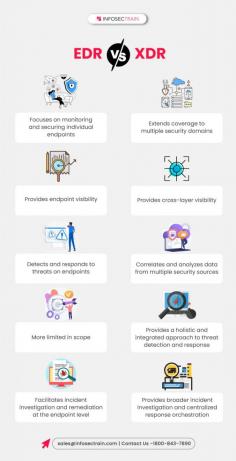
EDR (Endpoint Detection and Response) and XDR (Extended Detection and Response) are two powerful cybersecurity solutions designed to enhance threat detection and response capabilities. EDR focuses on monitoring, detecting, and responding to threats at the endpoint level, such as laptops, desktops, and servers. It provides detailed visibility into endpoint activities, enabling security teams to identify and remediate threats in real time. On the other hand, XDR expands this approach by integrating data across multiple security layers, including endpoints, networks, servers, emails, and cloud environments. This holistic view allows for better correlation of threat data, streamlined investigations, and faster incident response.

Thumb

0 repins 0 comments

The CISSP (Certified Information Systems Security Professional) and CISM (Certified Information Security Manager) certifications are two of the most respected credentials in cybersecurity, yet they focus on different aspects of the field. CISSP, offered by (ISC)², is geared toward professionals who want to demonstrate expertise in designing, implementing, and managing an organization’s security program across multiple domains, including security and risk management, asset security, and software development security. It is ideal for security practitioners and technical experts aiming to validate their hands-on, broad-based security knowledge.

Thumb

0 repins 0 comments

Free Masterclass on Road to CISSP Success: Essential Prep Guide & Study Hacks

Thumb

0 repins 0 comments

Free Masterclass on Road to CISSP Success: Essential Prep Guide & Study Hacks

Thumb

0 repins 0 comments

IPv4 addresses are 32-bit numerical labels used to identify devices on a network, written in a "dotted decimal" format (e.g., 192.168.1.1). Each IPv4 address consists of four octets, each ranging from 0 to 255, and is divided into network and host portions. Subnetting is a technique used to partition a large network into smaller, more manageable subnetworks, or "subnets." This allows for efficient IP address allocation, improved network security, and reduced broadcast traffic. By adjusting the subnet mask, network administrators can control the number of available subnets and hosts within each subnet. For example, a subnet mask of 255.255.255.0 (or /24) in CIDR notation allows 256 addresses, with 254 usable for hosts.

Thumb

0 repins 0 comments

Free Masterclass on Conquer CISM: Key Strategies and Exam Tips

Thumb

0 repins 0 comments

CISSP (Certified Information Systems Security Professional) and CISM (Certified Information Security Manager) are two of the most recognized certifications in cybersecurity, each catering to different roles and expertise within the industry. CISSP, provided by (ISC)², is designed for professionals who want to deepen their knowledge of a wide range of security practices, covering domains such as asset security, software development, and network security. It’s ideal for hands-on roles and is often pursued by security analysts, consultants, and engineers. In contrast, CISM, offered by ISACA, is targeted toward those in, or aspiring to be in, management roles.

Thumb

0 repins 0 comments

AI-powered ethical hacking tools are transforming the cybersecurity landscape, allowing security professionals to proactively identify and respond to potential threats with advanced precision. Some of the top AI-driven tools include Darktrace, which uses machine learning to detect unusual network activity and mitigate cyber threats autonomously. Cylance leverages AI algorithms for endpoint protection, detecting malware and anomalies before they can cause damage. Reveelium enhances threat intelligence by identifying abnormal behavior patterns, while Deep Instinct applies deep learning to detect known and unknown malware.

Thumb

0 repins 0 comments

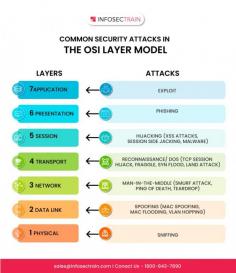
Have you considered how cyber-attacks target various layers of your network? Here’s a look at some common vulnerabilities: Application Layer : This layer is susceptible to exploits where attackers leverage software vulnerabilities. Presentation Layer : Phishing attacks can deceive users into disclosing sensitive information, putting data security at risk. Session Layer : Be cautious of hijacking, where attackers can take control of user sessions, gaining unauthorized access. Transport Layer : Reconnaissance attacks collect information about your system, often paving the way for larger and more damaging assaults.

Thumb

0 repins 0 comments

TLS, IPsec, and SSH are protocols designed to secure network communications, but they serve different purposes and operate at various layers of the OSI model. Transport Layer Security (TLS) is widely used for securing data in transit over the internet, particularly in web applications (HTTPS). Operating at the transport layer, TLS encrypts data between clients and servers to prevent eavesdropping and tampering, making it ideal for applications requiring privacy, such as online banking and e-commerce.

Thumb

0 repins 0 comments

IoT security best practices are essential for safeguarding devices and networks against cyber threats in the rapidly expanding Internet of Things (IoT) ecosystem. Key practices include strong authentication and access control to ensure that only authorized users and devices can access the IoT network. This involves using robust passwords, implementing multi-factor authentication, and regularly updating credentials. Device and firmware updates are crucial, as manufacturers often release patches to fix security vulnerabilities—keeping devices up-to-date minimizes potential attack vectors.

Thumb

0 repins 0 comments

Hackers are generally divided into three main categories based on their intentions and the legality of their actions: white hat, black hat, and grey hat. Ethical hackers known as "white-hat" hackers operate lawfully to assist businesses in locating security flaws and bolstering their defenses. They are frequently certified and employed by businesses to perform vulnerability assessments and penetration tests on systems.

Thumb

0 repins 0 comments

Introduction to Google Cloud Enterprise Security Architecture

Thumb

0 repins 0 comments

4 Dec (Wed) 8:00 – 9:00 PM Agenda for the Masterclass Introduction to DevSecOps Exploring the Current State of DevSecOps Role and Salary Insights for DevSecOps Engineers Lifecycle Stages and Essential Tools in DevSecOps Key Trends and Future Predictions for DevSecOps in 2025 Q&A Session Conclusion and Closing Remarks

Thumb

0 repins 0 comments

Unlocking Insights with Power BI and Data Analytics Agenda for the Webinar Introduction to Power BI Advantages of Power BI Data Visualization using Power BI Data Extraction in Power BI Data Cleaning in Power BI Forecasting in Power BI Publishing and Sharing Reports

Thumb

0 repins 0 comments

Thumb

0 repins 0 comments

Are you ready to elevate your career in software security? Join our **

Thumb

0 repins 0 comments

SOC 2 and ISO 27001 are both critical frameworks for information security, but they serve different purposes and industries. SOC 2 (Service Organization Control 2) is specifically designed for service providers that handle customer data, focusing on five trust service criteria: security, availability, processing integrity, confidentiality, and privacy. SOC 2 reports demonstrate how an organization safeguards its client data over time, making it crucial for businesses in cloud computing and software-as-a-service (SaaS).

Thumb

0 repins 0 comments

IPv4 (Internet Protocol Version 4) and IPv6 (Internet Protocol Version 6) are the two versions of the Internet Protocol used to identify devices on a network. IPv4, the older version, uses a 32-bit addressing scheme, allowing for approximately 4.3 billion unique addresses. However, with the explosive growth of the internet and connected devices, IPv4 addresses have become scarce. In contrast, IPv6 was developed to address this limitation by using a 128-bit addressing system, which supports an almost limitless number of unique addresses—about 340 undecillion.

Thumb

0 repins 0 comments

The Internet of Things (IoT) is transforming industries by enabling devices to connect, communicate, and exchange data seamlessly. IoT technologies encompass various components, including sensors, connectivity, data processing, and user interfaces. These technologies allow devices to gather and transmit data in real time, enabling automation, monitoring, and control across sectors like healthcare, manufacturing, and smart cities

Thumb

0 repins 0 comments

What’s New in Certified Ethical Hacker (CEH) v13 Introduction to CEH v13 Importance of CEH v13 in today’s cybersecurity landscape Key Changes in CEH v13 Highlights of New Topics

Thumb

0 repins 0 comments

Thumb

0 repins 0 comments

Thumb

0 repins 0 comments

https://www.infosectrain.com/events/crack-the-ccsp-code-10-essential-questions-to-master-the-exam-mindset/

Thumb

0 repins 0 comments

The Certified Cloud Security Professional is a globally recognized standard for professionals who wish to demonstrate their abilities in securing cloud assets of an organization. The CCSP certification gives an opportunity to IT professionals who wish to advance their careers in cloud security. The CCSP training allows participants to gain skills that allow them to design, manage, and protect data and applications in a cloud environment while adhering to the established practices, policies, and procedures.

Thumb

0 repins 0 comments

Cyber defense teams are the frontline protectors of an organization's digital assets, working to prevent, detect, and respond to cyber threats. These teams are composed of highly skilled cybersecurity professionals, including threat analysts, incident responders, and ethical hackers, who collaborate to safeguard critical information and infrastructure from cyberattacks. Their responsibilities range from monitoring network traffic for suspicious activities to conducting vulnerability assessments and implementing security protocols.

Thumb

0 repins 0 comments

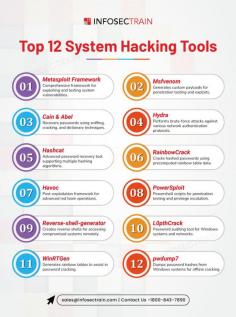
Advanced penetration testing tools are essential for cybersecurity professionals to identify, exploit, and assess vulnerabilities within a system or network. These tools go beyond basic scanning and help simulate real-world attacks, enabling security teams to strengthen defenses. Tools like Metasploit allow for exploitation testing, Burp Suite facilitates web application security assessments, and Nmap aids in network discovery and port scanning. Other advanced tools, such as Wireshark for network traffic analysis and OWASP ZAP for automated security testing, are widely used for detailed penetration testing. Mastering these tools equips professionals to better protect organizations from evolving threats and ensure robust security postures.

Thumb

0 repins 0 comments

Guarding against identity theft is essential in today’s digital world, where personal information can be easily compromised. To protect yourself, always ensure that sensitive data, such as Social Security numbers, passwords, and financial details, are stored securely. Use strong, unique passwords and enable two-factor authentication (2FA) on your accounts to add an extra layer of protection. Regularly monitor your bank statements and credit reports for any suspicious activity, and be cautious of phishing scams that attempt to steal personal information. Additionally, avoid sharing personal details on unsecured websites or through public Wi-Fi networks. Taking these proactive steps can significantly reduce the risk of identity theft and safeguard your personal information.

Thumb

0 repins 0 comments

Preparing for the CRISC (Certified in Risk and Information Systems Control) exam requires access to the best study materials and resources. The CRISC certification focuses on risk management, IT systems control, and governance, making it vital to use comprehensive resources that cover these areas in depth. In this guide, we’ll explore the Top 5 Best CRISC Study Resources that can help you effectively prepare for the exam. From official study guides to practice exams and online training, these resources are designed to give you a solid foundation in CRISC domains and improve your chances of passing the certification.

Thumb

0 repins 0 comments

The Data Protection Officer (DPO) training course by InfosecTrain helps organizations comply with General Data Protection Regulation (GDPR) requirements by identifying and addressing gaps in their current processes related to procedures, privacy policies, consent forms, data protection impact assessments, and working instructions.

Thumb

0 repins 0 comments

Next Page